

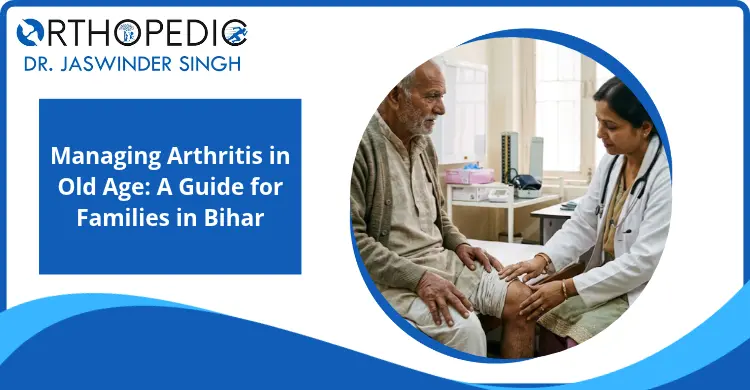
Watching a parent slow down is hard. They begin avoiding the stairs, wait for someone to help them stand up, or quietly give up the evening walk. Many families in Bihar put this down to age and move on. Yet arthritis in old age is common, it can be managed, and it is not something your family has to simply accept.
This guide is written for sons, daughters, and caregivers. It explains how arthritis affects daily life, what practical help at home looks like, and when to involve an orthopedic specialist.
Arthritis means inflammation or wear of a joint, leading to pain, stiffness, and reduced movement. In older adults the most common form is osteoarthritis, where the cartilage that cushions a joint thins over many years. According to the World Health Organization, osteoarthritis most often affects the knee, hip, and hand, and regular exercise with a healthy body weight can reduce symptoms.
Age is a major factor, but not the only one. Earlier joint injuries, excess body weight, family history, and years of heavy physical work can all contribute. Common does not mean normal, though. Joint pain that limits daily life deserves attention, not silence.
Families often notice the effects before the patient talks about them. Many older adults hide their pain. Watch for changes such as:
Pain and stiffness can also increase the risk of falls, which are especially serious at an older age. If you are unsure whether what you see is arthritis, our guide to the early signs of arthritis explains the warning signs in detail.
Good care at home is usually gentle, steady, and shared among family members. Small habits add up over time.
Rest alone does not protect stiff joints. Short walks on flat ground, seated leg exercises, and light stretching usually help keep joints mobile and muscles strong. Start with a few minutes and build up slowly. Ask the treating doctor or a physiotherapist which exercises suit your parent, and stop any activity that causes sharp or lasting pain. A balanced diet and a healthy weight also ease the load on the knees and hips, but any major diet change should be discussed with a doctor first.
A few simple changes can make daily tasks easier and lower the chance of a fall:
Many older adults already take tablets for blood pressure, diabetes, or the heart. Some common painkillers can irritate the stomach or affect the kidneys and blood pressure, so they are not safe for everyone. Please do not give or buy painkillers from a pharmacy without medical advice. Keep a written list of all medicines for every doctor visit.
Long-term pain can bring frustration and loneliness. Listen without dismissing the pain, let your parent do what they still can on their own, and include them in family decisions. If sadness or withdrawal continues, mention it to the doctor.
Caring for an older parent can be tiring. Divide tasks such as appointments, medicines, and exercise reminders among family members so one person is not carrying everything, and accept help when it is offered.
Home care helps, but it has limits. Arrange a specialist visit if your parent:
A specialist can examine the joint, arrange imaging if needed, and explain what is happening in clear language. Our arthritis treatment for elderly service takes the whole person into account, including other health conditions and current medicines. Bring a family member to the visit so nothing is missed.
Treatment depends on the type of arthritis, the joints involved, and your parent’s overall health. Options may include:
Age alone does not rule out treatment. Suitability is decided after a full assessment. For a closer look at these choices, read our guide to arthritis treatment in Patna.
Dr. Jaswinder Singh holds MBBS, MS, DNB, and MCh qualifications along with DSICOT (Belgium) and MRCSA (Glasgow), and specializes in joint replacement. At Orthovita Hospital, Bailey Road, Patna, he evaluates patients of all ages, including older adults, and discusses each option with the family before any decision is made.
There is no single best treatment. A specialist usually combines exercise, safe medicines, and home support first, and considers injections or joint replacement only when symptoms stay severe despite these measures.
Encourage gentle daily movement, keep the home safe, help them follow prescribed medicines, and offer emotional support. Avoid unsupervised painkillers, and arrange a specialist review if pain persists or limits daily activities.
Arthritis is common with age, but it is not a normal or unavoidable part of aging. Persistent joint pain and stiffness should be evaluated, because treatment can often ease symptoms and protect mobility.
Gentle, low-impact activities such as flat-ground walking, seated leg lifts, stationary cycling, and light stretching are usually suitable. Check with a doctor or physiotherapist first, and stop if exercise causes sharp pain.
See an orthopedic doctor if joint pain lasts more than a few weeks, disturbs sleep, causes swelling or instability, leads to falls, or makes walking and everyday tasks noticeably harder.
Arthritis in old age can feel like a quiet loss for the whole family, but it does not have to be faced alone. Gentle movement, a safer home, careful medicines, and timely specialist advice can help your parent stay comfortable and independent.
If a parent’s joint pain is slowing them down, take the next step this week. Book your consultation at Orthovita Hospital, Bailey Road, Patna. Call +91-9234040989 or book your appointment online today.
This content is for general patient information only and does not replace a professional medical evaluation. Please consult a qualified orthopedic specialist for advice specific to your condition.