

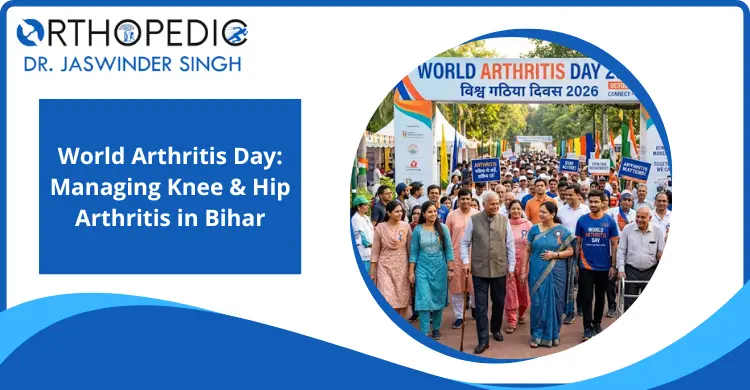
Every year on October 12, World Arthritis Day reminds us that joint pain is not simply a normal part of getting older. For many families in Bihar, knee and hip arthritis management is delayed because pain is accepted as routine, or because people hope it will settle on its own. Over time, that delay can make walking, climbing stairs, and sitting on the floor harder than it needs to be.
This World Arthritis Day guide explains how knee and hip arthritis affect daily life, which everyday habits can help, and when it is time to see an orthopedic specialist. It is written for patients and for the family members who support them.
World Arthritis Day is observed every October 12 to raise awareness of arthritis and related joint conditions, and to encourage people to seek help early. According to the World Health Organization, osteoarthritis most often affects the knee, followed by the hip and the hand, and regular exercise with a healthy body weight can reduce symptoms.
In Bihar, the message is especially relevant. Many people live with knee or hip pain for years before seeing a specialist. Some assume pain is simply age, some rely on repeated painkillers from a local pharmacy, and some travel long distances only when walking has become very difficult. Awareness days are a good moment to pause, look at your own joints, and ask whether it is time to get them checked.
Acting sooner matters because early care gives you more options. Simple measures started at the right time can ease pain, keep you independent, and may delay the need for more complex treatment. Waiting until walking is very difficult leaves fewer choices.
Arthritis is inflammation or wear of a joint that leads to pain, stiffness, and reduced movement. The most common form in adults is osteoarthritis, where the smooth cartilage cushioning the joint gradually thins. The knees and hips carry the body’s weight, so they are often affected first.
In everyday life, knee and hip arthritis can show up as:
If you are not sure whether your symptoms fit, our guide on the early signs of arthritis explains what to watch for.
There is no single fix, but a steady routine of small habits can ease symptoms and protect your joints. Good knee and hip arthritis management usually starts with simple, non-surgical steps, which is also what most medical guidelines recommend.
Gentle movement keeps joints flexible and the muscles around them strong. Walking on flat ground, cycling on a stationary bike, swimming, and simple strengthening exercises are usually well tolerated. High-impact activities such as running or jumping can aggravate painful joints.
Start slowly and increase gradually. A physiotherapist or orthopedic specialist can recommend exercises suited to your joint and your level of pain, which is safer than copying routines from social media.
Extra body weight adds load to the knees and hips with every step. Even modest weight loss can reduce joint strain, and it is one of the most consistently recommended steps in arthritis care. A balanced home-cooked diet with plenty of vegetables, pulses, and protein supports this goal.
Pacing also matters. Break long chores into shorter sessions, avoid sitting or standing in one position for hours, and rest when a joint feels overworked.
Small changes at home can make a real difference:
Heat or cold packs may help short-term comfort, but they do not treat the cause. Use medicines only as prescribed, since long-term, unsupervised painkiller use carries its own risks.
Self-care helps many people, but it has limits. It is time to see an orthopedic specialist if:
A specialist will examine the joint, usually order an X-ray, and explain whether medicines, injections, physiotherapy, or surgery are appropriate. Our detailed guide to arthritis treatment in Patna covers these choices step by step. When arthritis is advanced and daily life is badly limited, procedures such as knee replacement surgery or hip replacement surgery may be discussed. Surgery is never the first step, and not everyone needs it.
Older relatives often hide their pain so they do not become a burden. Families can help by noticing quiet changes: shorter walks, avoiding stairs, skipping social events, or needing support to stand. Offer to accompany them to appointments, help them follow exercises, and make the home safer.
Care for older adults often needs a gentle, personalized approach that considers other health conditions and medicines. Learn more about arthritis treatment for elderly patients at Orthovita Hospital.
Arthritis usually cannot be reversed, and worn cartilage does not grow back. However, exercise, weight control, and early treatment can reduce pain, improve movement, and slow how quickly the joint changes.
Yes, regular, gentle walking on flat ground generally helps knee arthritis by keeping the joint mobile and the surrounding muscles strong. If walking increases pain or swelling, reduce the distance and consult a specialist.
Low-impact options such as walking, swimming, water exercises, cycling, and gentle strengthening are usually recommended for hip arthritis. A physiotherapist can tailor a program to your pain level and hip movement.
See a doctor if knee pain lasts more than a few weeks, disturbs sleep, causes swelling or giving way, or makes walking and stairs difficult. Early assessment gives you more treatment choices.
Surgery is usually considered when hip pain is severe, constant, or disturbs sleep, and non-surgical treatments no longer help. Your orthopedic specialist decides this after examination and imaging, together with you.
World Arthritis Day is a reminder that knee and hip pain deserve attention, not silence. Staying active, managing weight, making your home safer, and seeking help at the right time can protect your mobility for years. Steady knee and hip arthritis management is a long-term habit, not a one-time fix, and families who talk openly about joint pain tend to act sooner.
Dr. Jaswinder Singh (MBBS, MS, DNB, MCh, DSICOT Belgium, MRCSA Glasgow) specializes in joint replacement and sees patients across Bihar. If joint pain is limiting your day, book your consultation at Orthovita Hospital, Bailey Road, Patna. Call +91-9234040989 or book your appointment online today.
This content is for general patient information only and does not replace a professional medical evaluation. Please consult a qualified orthopedic specialist for advice specific to your condition.